
Miami County Busted Mugshots Explained
A booking photograph is an ID picture snapped when someone enters the county jail. The intake process also gathers a name, a booking number, the arresting agency, charges, bond, holds, property, and release details. All of it sits under one roof. The Miami County Jail, run by Sheriff Frank W. Kelly's office at 209 S. Pearl Street in Paola, holds up to 96 people in a building that opened in 2018. So a Miami County busted mugshot is just the first record in a longer chain, one piece of paper among many.
What a Miami Booking Record Can Show
Miami County has no working roster to check public fields against. Don't assume another Kansas jail's layout matches this one. Ask Sheriff's Records instead. They can confirm which fields exist for one person and a narrow date range.
| Requested field | Why it matters |
|---|---|
| Name, aliases, age or birth date | Separates people with similar names. |
| Booking number and intake time | Identifies the jail event. |
| Arresting agency | Points to the police-report custodian. |
| Booked charge and statute | Shows the intake charge, not the outcome. |
| Bond, hold, or detainer | Explains custody terms at that time. |
| Release date and reason | Separates a past stay from current custody. |
| Booking photograph | Confirms whether an intake image exists and is releasable. |
| Court reference | Bridges to the disposition. |
Name the artifact precisely. Request the "booking sheet or jail intake record and associated front-view booking photograph." A demand for the whole criminal file risks mixing routine booking material with exempt investigative information.
Request Busted Mugshots from Records
Start with the official Sheriff's Records page. Requests go in person or by mail to Miami County Sheriff's Office, Attn: Records Division, 209 S. Pearl St., Paola, KS 66071. Include a report number if you have one, plus the incident date, time, location, and names. The office answers at 913-294-3232, and the records fax is 913-294-9118. Walk-in hours run Monday through Friday, 8 a.m. to 4 p.m.
- Identify the person with a full name and approximate booking date.
- Ask for the intake sheet, photograph, booking and release times, arresting agency, charges, bond, and case number to the extent open.
- Request electronic copies and an itemized estimate before processing.
- Ask for the legal basis for each withheld field.
- Use the case number to check the court record.
Check the Sheriff fee schedule before you budget. A first sheriff report costs $5, with supplemental pages at 25 cents each. A photo CD runs $40, and a booking-room video costs $20. Search or review charges may apply on top. These lines don't add up to one universal mugshot price, so ask for a quote on the specific item. Bring exact cash for in-person payment; money orders payable to MCSO work too. Cards are not accepted.
Kansas Law and Busted Mugshot Access
Kansas starts from openness. The Kansas Open Records Act, K.S.A. 45-215 through 45-229, grants access but carves out exemptions in K.S.A. 45-221. The Attorney General's KORA guidance explains the practical effect: mugshots and standard arrest reports aren't required to be open, and agencies may close them at their discretion. The front page of a standard offense report, though, is open. You can request a booking photo. Release is never guaranteed.
Timelines matter. K.S.A. 45-218 forces agency action as soon as possible, and no later than the end of the third business day. Action can mean production, denial, or a written explanation of the delay with the earliest availability date. Full production within three days isn't promised. Miami County itself says a reply to a copy request may take up to 72 hours, depending on when it arrived and what it covers.
Some categories stay restricted. Juvenile, sealed, expunged, investigative, victim-identifying, and security-sensitive material can all be withheld. Kansas has no verified statute forcing a private mugshot publisher to delete a page, nor one banning a removal fee, so never pay anyone who guarantees deletion. Correction starts with the official custodian. Eligible people can file through the Kansas Judicial Council adult expungement forms, reviewing K.S.A. 22-2410 or 21-6614 first. Eligibility turns on the case, so legal advice may help.
Find Recent Miami County Busted Mugshots
No single database tracks every stage of custody. Match the source to the person's current status. That's the whole trick.
- For someone just booked or in custody now, call the jail at 913-294-3232 and ask whether the roster has a replacement address.
- For a released person or a particular photo, send a narrow KORA request to Sheriff's Records.
- For filed charges and outcome, use the Kansas District Court records guide.
- For a person convicted and committed to or supervised by KDOC, search KASPER.
- Use BOP or ICE only for federal or immigration custody.
No official Miami County sheriff app has been verified. Everbridge handles emergency alerts, and Kansas VINE sends custody notifications. Neither one is a mugshot feed.
Choose the Right Miami Record Channel
| Status | Starting point | Photo? |
|---|---|---|
| Just booked | Jail phone or Records request | Ask Records |
| In custody now | Jail phone while roster is unavailable | No display verified |
| Released | Booking request plus court portal | May be requestable |
| Prosecuted | Municipal or District Court | Usually not a photo source |
| State custody/supervision | KDOC KASPER | Potential KDOC photo |
| Federal | BOP locator | No locator photo |
| ICE | ICE locator | No photo |
| Wanted | Sheriff or court confirmation | No complete list verified |
| Historical | Records, court, then archives | Not guaranteed |
Keep the channels straight. An old third-party image shouldn't be read as present custody. Pick the record source that fits the moment you're asking about.
Busted and Booked Without a Roster
The county menu shows an "Inmate Roster" label. The link goes to the same informational jail page. That page has no name field. It shows no results, no photographs, and no update time. There is no archive either. Nor is there a stated rule on how long entries persist. The practical route is a phone call. Dial 913-294-3232, give a name and an approximate date, then ask whether the person is held and whether a replacement URL exists.
The official page is cited for one reason. It documents the jail itself, not the people in it.
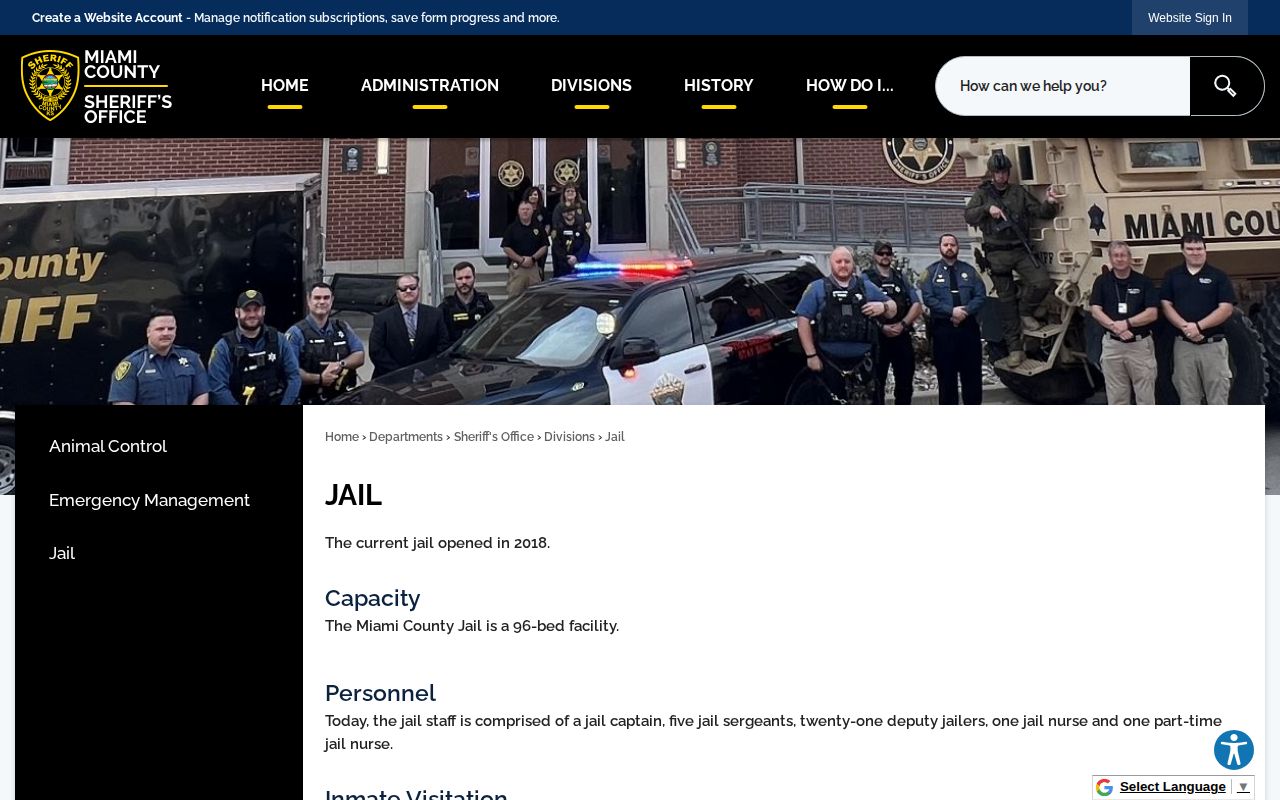
A blank search proves little. The person may be held, released, or listed under a different spelling. This web channel simply didn't answer the question.
No Recent Busted Booking Feed
No official Miami County booking feed was verified. No same-day, 24-hour, 48-hour, 72-hour, weekly, or archived log exists to describe, so no feed fields, photographs, cadence, or persistence policy can be honestly stated. The fallback is a bounded KORA request for a log over dates you specify. Ask for name, booking date, arresting agency, booked charge, bond, release data, and a booking identifier.
Two nearby sources get mistaken for booking feeds. Spring Hill's last-24-hours calls-for-service log and Osawatomie's weekly aggregate report are not them. A call can end without an arrest. An arrest can also fail to appear in a city activity summary. Treat both as context, not custody records.
When the Inmate Roster Loops Back
Treat a glitchy county roster tool as a local quirk. Don't lean on unofficial galleries because of it. Retest the official navigation first. If a vendor portal comes back, inspect one result closely before trusting any claim about search fields, photos, update frequency, or how long entries linger after release. Detention staff can say who is in custody right now. Records handles the paperwork and photographs.
How fast does an arrest become a published entry? Nobody publishes that clock. Identity checks matter, and so do medical screening, transfers, and plain system lag. Kansas law does require that an arrested person see a magistrate without unnecessary delay. Still, it sets no single 48-hour first-appearance rule.
After Someone Is Busted: Court Outcomes
A booking record captures a moment. The court docket tells the rest. Filed charges, attorneys, the judge, hearings, pleadings, orders, a dismissal, a plea, a judgment, and a sentence all live there, when public. Kansas separates case information from actual court documents, and some papers can only be viewed at a courthouse terminal or requested from the clerk.
The Miami County District Court sits in the Sixth Judicial District. Plenty of juvenile, expunged, and sealed cases stay out of public view entirely. A jail entry disappearing is not an outcome by itself. The docket is where the disposition lives.
Alerts Are Not Busted Mugshot Archives
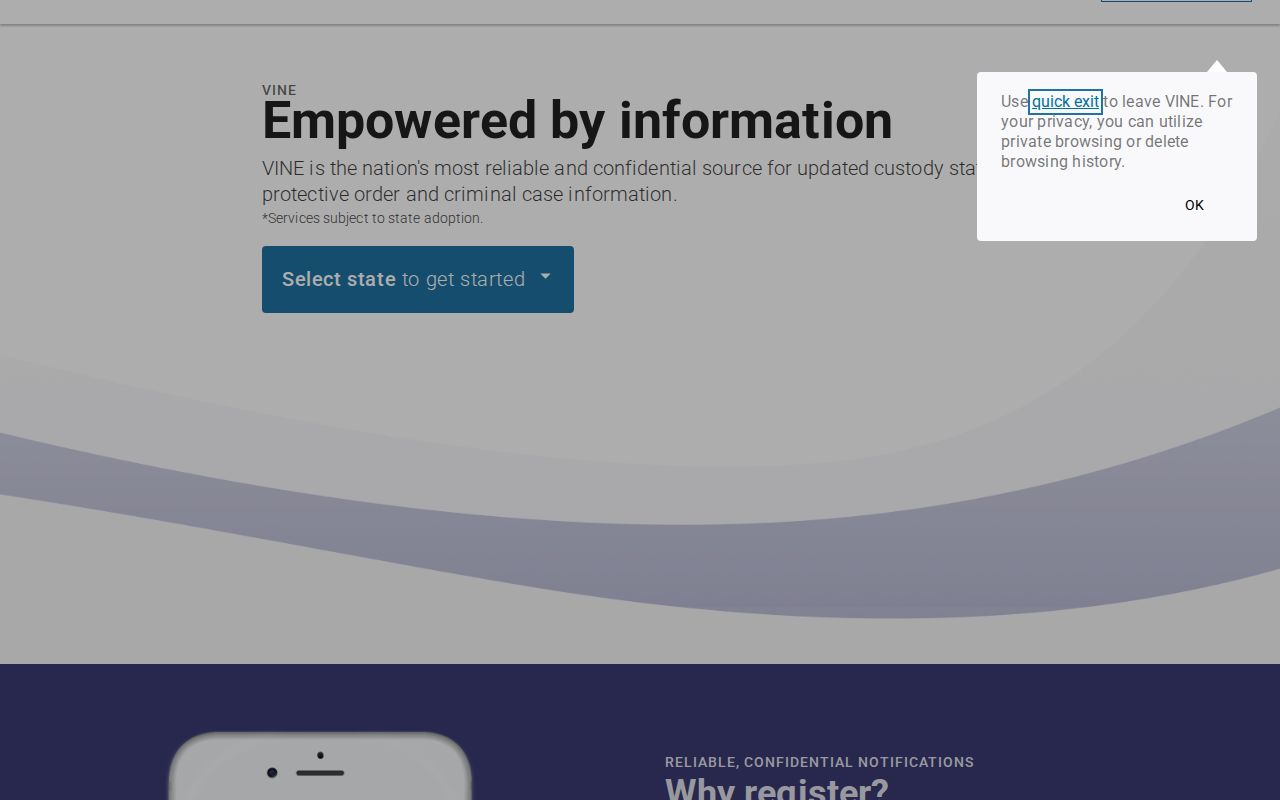
Three alert systems serve the county. Everbridge sends urgent local notices, CivicPlus Notify Me carries Sheriff's Office news, and Kansas VINE reports custody-status changes. Useful as they are, alerts only flag activity. None of them amounts to a full arrest database or a steady stream of booking photos.
The VINE image below shows how the notification route works.
Old Miami County Mugshots and Retention
Kansas retention schedule 0002-114 covers this. It is listed under Arrest Records and indexed as mug shot and fingerprint records. Misdemeanor arrest records survive five calendar years. Felony arrest records last twenty before destruction. Inmate case files generally survive five years after incarceration ends. Temporary holdings last two years, and jail reports two years after release. The permanent Jail/Commitment Record is not necessarily a photo.
K.S.A. 45-403 forbids destroying records without authorization. Section 45-404 allows qualifying records to move elsewhere. No source confirms any Miami County mugshot collection was ever transferred, though. Ask Records which series covers your request. Then search the Kansas State Archives by county, sheriff, jail, agency, and date. KASPER is not a county booking archive.
Official and Unofficial Busted Sources
Start with official channels. The jail, Records, the court, and KDOC come first. Among major third-party aggregators, only Mugshots.com's Miami County page checks out as a real Kansas listing. It shows 565 entries sorted into year buckets from 2011 through 2015. Treat it as a historical lead only. It is stale, incomplete, and no substitute for a current roster.
Busted Newspaper, Recently Booked, Arrests.org, and Mugshots.zone have no verified Miami County, Kansas browse section. Avoid guessing URLs. Watch out for Ohio results creeping in. Always check third-party pages against official records. No photos are hosted or rehosted here, and no paid-removal service is linked.
Busted Mugshots by Miami County City
Each city page takes a different angle. Paola Busted Mugshots walks the city-police-to-jail route and its $5 report copy. Louisburg Busted Mugshots untangles city reports from sheriff dispatch and jail intake. Osawatomie Busted Mugshots shows why aggregate calls reports are not named arrest logs.
Spring Hill ranks fourth counting only its Miami County population. The city straddles the Johnson County line, so pin down where an incident happened and which agency made the arrest before choosing a system. Its January 2026 near-real-time 24-hour activity log offers helpful context as radio traffic shifts toward encryption. But it proves neither an arrest nor a booking.
Paola Jail Intake and City Records
Paola offers the county's simplest routing. The jail, the Sheriff's Office, the district court, and the city police all sit together in the county seat. Simple still means three custodians, not one. Paola Police produces the incident and arrest report. Miami County Jail produces the intake and custody record. District Court produces the prosecution record. Someone hunting a record after a Paola arrest should first figure out which document they need.
Paola Police charges $5 for a report copy. That fee does not carry over to a sheriff booking photograph. The Sheriff's schedule prices reports, media, and staff time differently. Ask the city for its report, Sheriff's Records for the booking sheet and image, and the court for the disposition.
Louisburg's Three Record Custodians
Louisburg splits its records three ways. The police department keeps its own reports. Routine dispatch runs through Miami County Sheriff dispatch. And once an arrest sends someone to county detention, the jail holds the intake record. The chain, then, has three links: dispatch context from the Sheriff, an incident or arrest report from Louisburg Police, and a booking or release record from the jail.
One caution. The Louisburg crash-report search is a collision tool, not an arrest feed. A crash result never confirms custody. Start with the record type and date. Then contact each custodian only when needed.
Osawatomie Calls Are Not Arrests
Osawatomie Police posts weekly Calls for Service Reports as aggregate categories and counts. The archive tends to run behind. It carries no names or mugshots. Aggregate activity can hint at general police workload, but it cannot say who was arrested or prove that any call ended in a booking. For an Osawatomie incident, request the city police report first. Then contact Miami County Jail if custody or intake is the question. One pricing note: Osawatomie's $5 report fee does not set the Sheriff's charge for an image.
How to Describe a Busted Record Request
A narrow request is easier to search and cheaper to price. Give a full name, a short date range, the likely arresting agency, and the exact artifacts you want. Say that electronic copies are preferred. If the report number is unknown, supply the incident location and approximate time instead. Ask for an estimate before work starts, and invite Records to suggest a tighter description if staff time would make the request expensive.
Keep booking and court terminology separate. "Booked charges" means what jail intake recorded. "Filed charges" means what the prosecutor put before the court. "Disposition" means how the court resolved the matter. "Release" means the person left a particular custody status. Using each term deliberately lowers the odds of getting the wrong record or misreading an early event as a final outcome.
If Records denies or redacts material, request the statutory basis in writing. You can also ask whether segregable open fields can be produced even when another portion stays closed. Don't ask staff to build a new roster, run an investigation, or draw legal conclusions. The goal is a well-described existing record.
Responsible Miami County Record Use
Arrest records come with limits. They cannot support decisions about hiring, renting, credit, insurance, licenses, or any other eligibility determination, and this private guide is not a consumer reporting agency under the Fair Credit Reporting Act. A name alone proves little. Match identities with the booking date, the arresting agency, a case number, or another lawful identifier, since photos grow old and names get shared. Aggregator sites can also leave a charge posted long after the official case has moved on.
Court outcomes matter more than early filings. If the court later reports a dismissal, an acquittal, diversion, an amendment, or an expungement, that newer official event outranks the original charge. Confirm current custody by calling the jail instead of trusting a cached search result. For wanted-person notices, rely on the Sheriff's published channel. Never approach or confront someone on a warrant list, never harass anyone, and never use these records to dodge law enforcement. Emergencies and crimes in progress belong with 911.